

Nutrition Counseling in the Exercise Network: We’re Asking You!
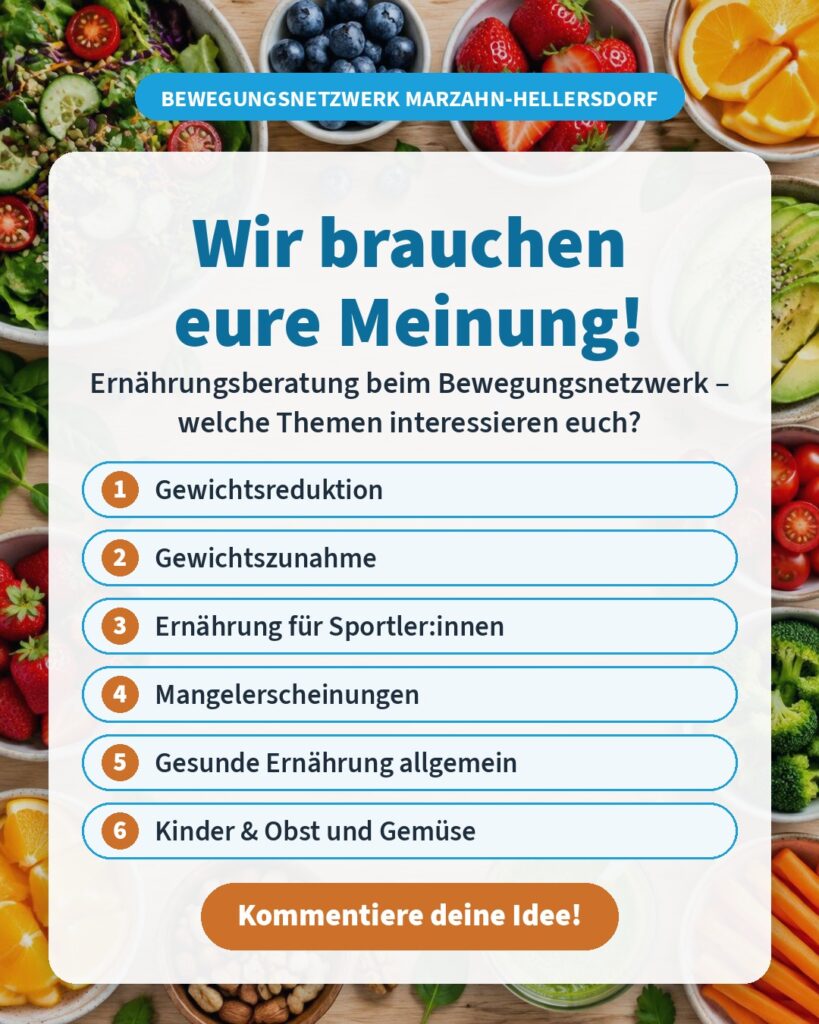
Exercise and nutrition go hand in hand. Anyone who exercises regularly quickly realizes how much proper nutrition contributes to their well-being. That’s why we at the Marzahn-Hellersdorf Exercise Network would like to know from you: Would you like nutritional counseling? Why Nutritional Counseling Can Be Helpful 1. Weight Loss Do you want to lose weight but aren’t quite sure how to get started? A consultation can show you how to maintain a balanced diet over the long term. 2. Weight gain Even gaining weight on purpose can be a challenge. Here, we’ll discuss how to gain weight in a healthy and targeted way. 3. Nutrition for Athletes People who exercise a lot have different needs. The right diet supports performance, recovery, and well-being. 4. Deficiency Symptoms Fatigue, exhaustion, or other symptoms can sometimes be related to your diet. A consultation can help guide you on what to look out for. 5. General Information About Healthy Eating Would you simply like to learn more about how to eat a healthy and varied diet in your everyday life? That’s an important topic, too. 6. Children don’t eat fruits and vegetables Many parents are familiar with this: fruits and vegetables are left on the plate. In such cases, it can be helpful to get ideas and tips on how to help children enjoy healthy food more. We’d like to hear your opinion So that we can plan a program that truly suits you, we need your feedback. Which topics interest you the most? Do you have any other ideas or requests? Feel free to write to us or reach out to us via our social media channels on Instagram and Facebook. Every piece of feedback helps us further develop our programs in the district. We look forward to hearing your ideas!
Presentation Poledance
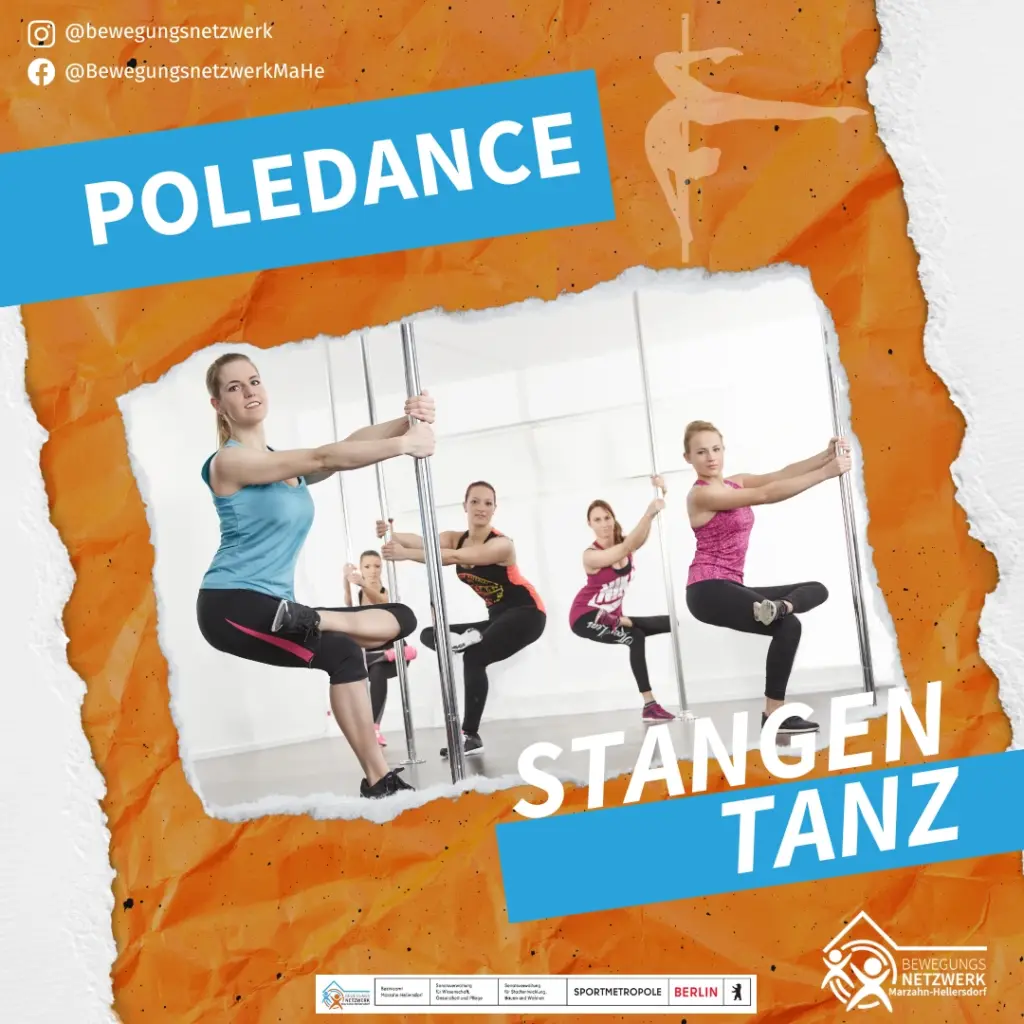
This article introduces you to the acrobatically challenging sport of pole dancing. The term comes from the English language and translates as pole dancing. It is a form of dance and sport that is practiced both in circus arts and in gymnastics clubs. Pole dancing is performed on a fixed or freely rotating pole. In particularly artistic forms, several poles are also used. History of pole dance The origins of pole dancing come from Asia. Pole dancing, which is widespread today, developed from traditional Asian acrobatics, which were primarily practiced by men. The earliest records date back to the 12th century. They refer to the Indian sport Mallakhamb, which describes gymnastics on a pole made of wood. At the beginning of the 20th century, pole dancing also became increasingly popular in the western world. In the traveling circuses of the USA, female artists in particular incorporated the poles of the circus tent into their performances. In the 1980s, popularity grew rapidly throughout North America and spread to the rest of the world. In the meantime, pole dancing has become a very popular recreational sport. Numerous fitness training and dance classes are offered throughout the country. International competitions are held regularly. The International Pole Dancing Association is striving for recognition as an Olympic sport. Special features of pole dancing By using a pole when dancing, special figures can be performed that seem to defy gravity. In order to achieve this effect, the pure muscle power of the arms, legs or hands is used to generate such high contact pressure that the dancer does not slide to the floor at all or does so in a very controlled manner. Breathtaking overhead positions or violent rotations around the pole make this sport very complex and unique for spectators. In particularly artistic variations, several athletes perform on one pole. Loose or suspended poles can also be used. For international competitions, the pole diameter is 45 mm, but can otherwise vary between 40-50 mm. The pole is made of polished pole material or cast iron and is available in different versions. Versions that are quick to set up and dismantle can be purchased for around €400.00. A certain amount of experience and physical fitness is required to practise pole dancing safely and aesthetically. The upper body and pelvic area in particular are strengthened because the entire body weight has to be held and supported at times during gymnastics. A soft surface is recommended during training to reduce injuries from falls. The friction of the skin on the pole can cause abrasions and minor bruising. To increase the grip on the bar, magnesia, which is familiar from gymnastics, is sometimes used. Pole dance in Berlin There are now several dance schools and fitness studios in Berlin that offer pole dance classes. In Marzahn-Hellersdorf, for example, there is the EEE sports studio in Oberfeldstraße.
Seasonal nutrition in December

Which foods can be harvested in December? Chestnuts bring wonderful warmth into the kitchen. Whether roasted in the oven for snacking, as a soup or processed in sauces, chestnuts impress with their nutty flavor and are also a healthy snack. Kale is also very popular in winter and a well-known side dish on cold days. But kale can also be used wonderfully in smoothies to score points with lots of vitamins. Graphics seasonal calendar: ©Alexandra Hansmeier
Seasonal nutrition in November
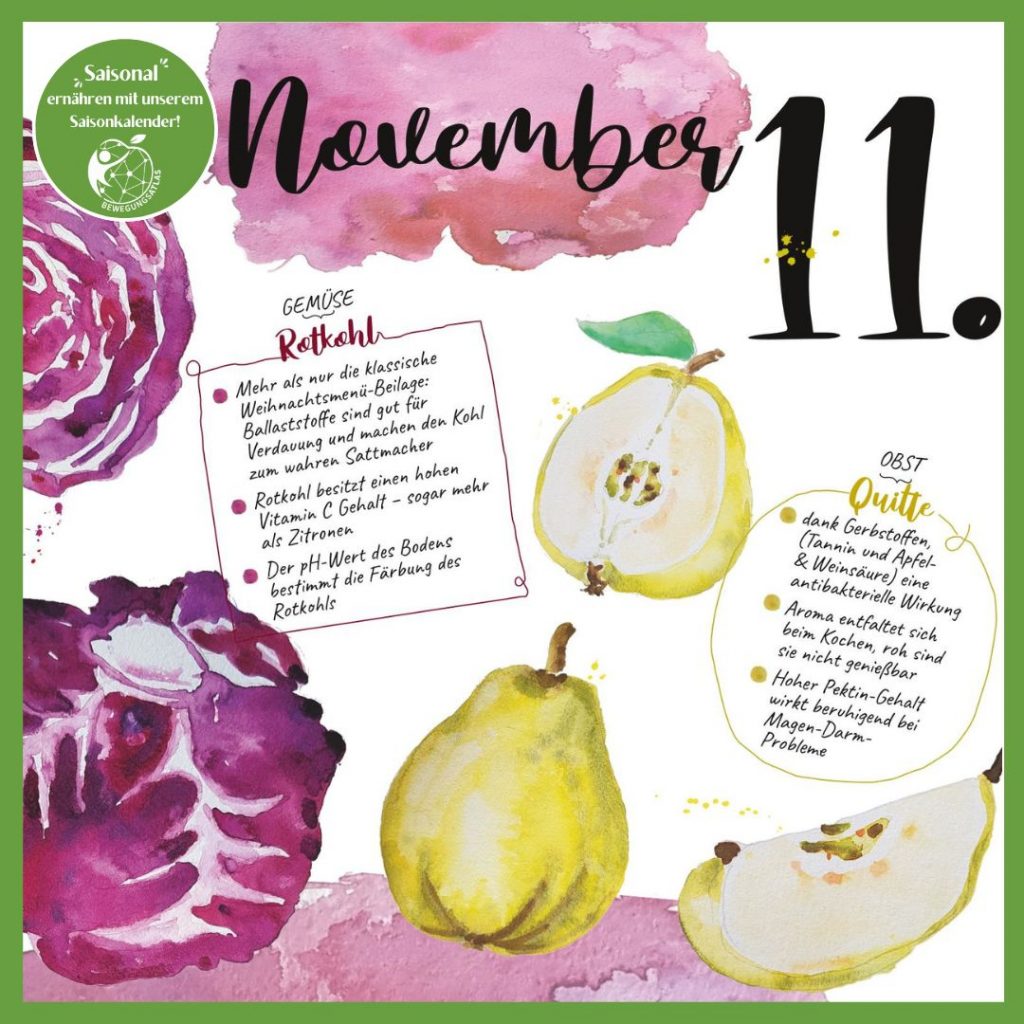
What foods can be harvested in November? Quinces make great jelly or compote. Quinces develop their aromas when cooked – they are less enjoyable raw. Red cabbage also tastes particularly good after long simmering. However, it can also be used as a raw vegetable salad so that the nutrients it contains are not lost through heat. Graphics seasonal calendar: ©Alexandra Hansmeier
Feed seasonally in October
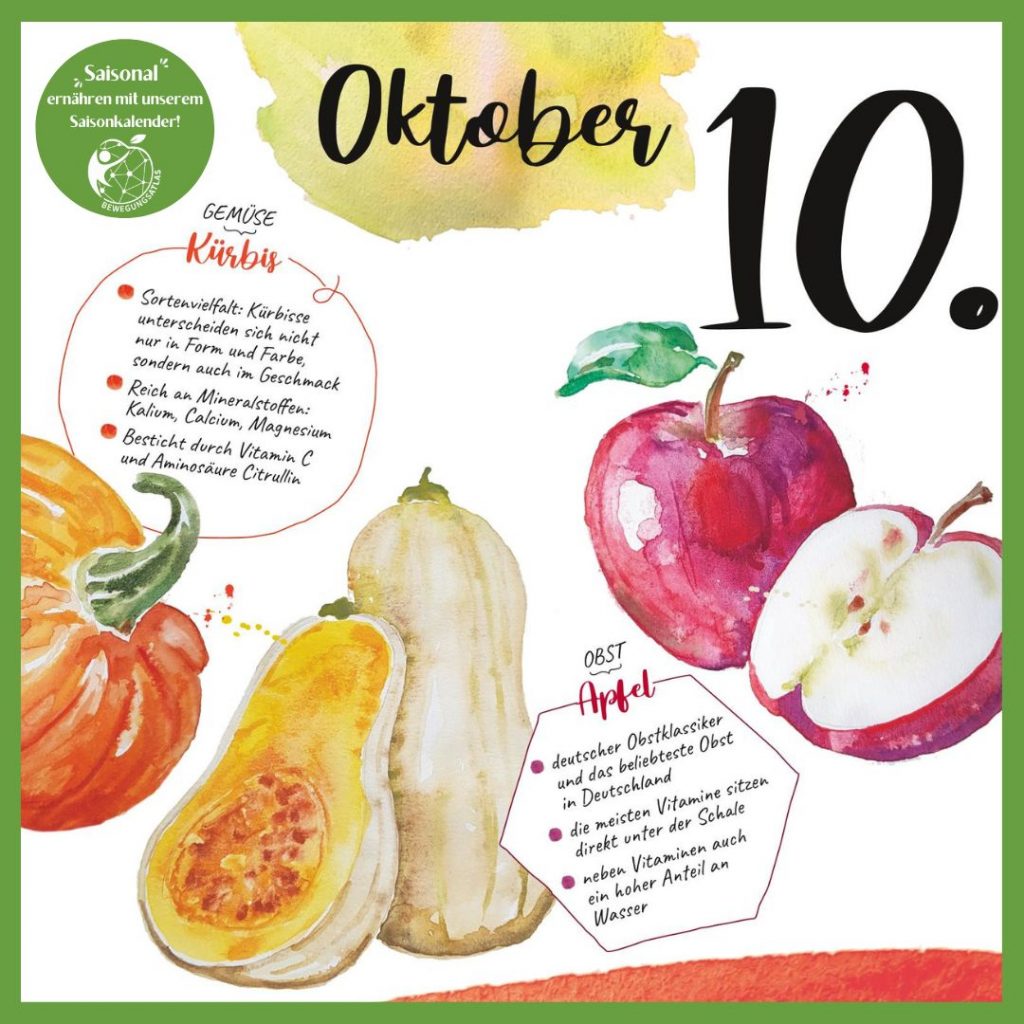
What foods can be harvested in October? From pumpkin can be prepared the most diverse dishes. Whether as a warming soup, together with other vegetables in the oven or simply cooked – pumpkin heralds the autumn. Apples can also be used in a variety of ways and, if stored properly, have a long shelf life so they can be enjoyed for several weeks. Graphics seasonal calendar: ©Alexandra Hansmeier
Feed seasonally in September
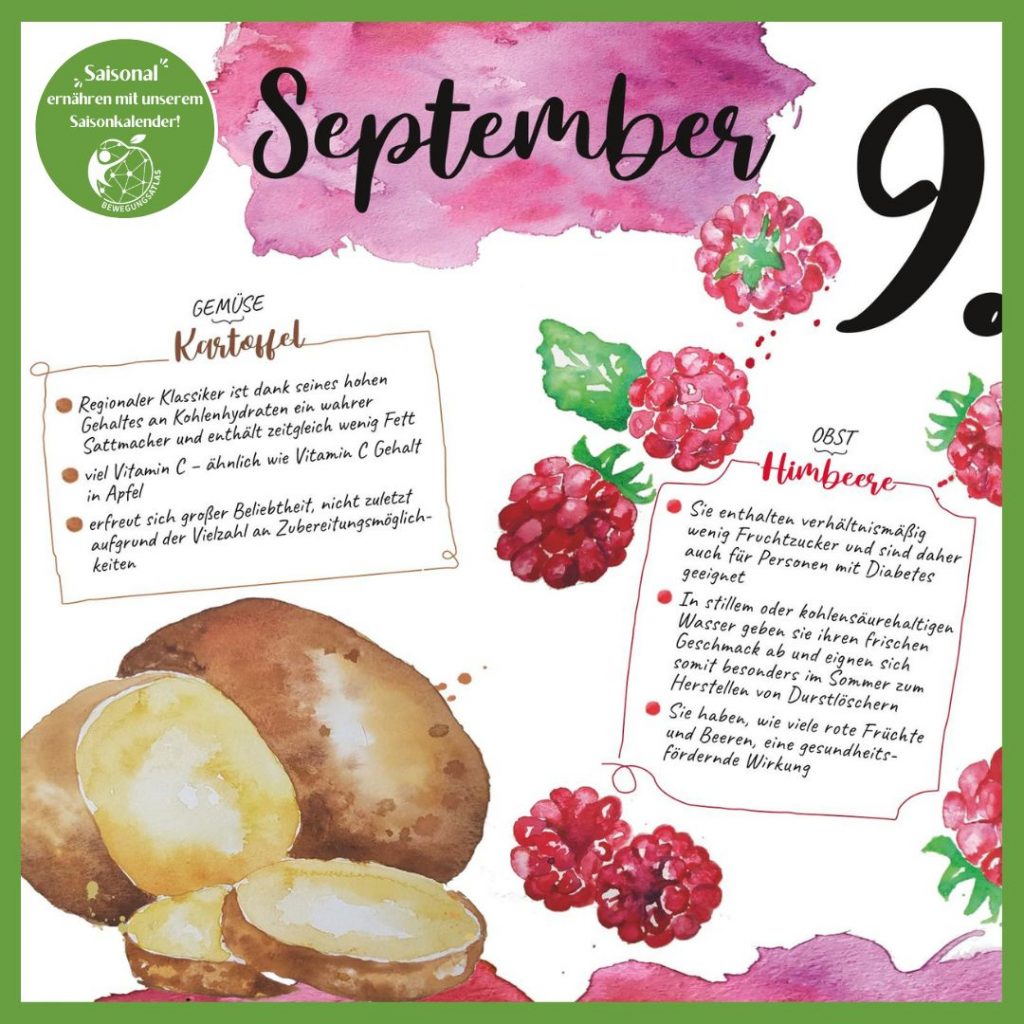
What foods can be harvested in September? Raspberries can be enjoyed in many different ways – as a snack between meals, in a cake or even in a salad. They are considered a miracle weapon for the body due to their strengthening effect on the immune system as well as the cardiovascular system. Potatoes are a classic on the menu and a good satiator without much fat. As gratin, oven cuts, puree, cold in a salad or simply cooked – the potato fits almost always. Graphics seasonal calendar: ©Alexandra Hansmeier
Feed seasonally in August
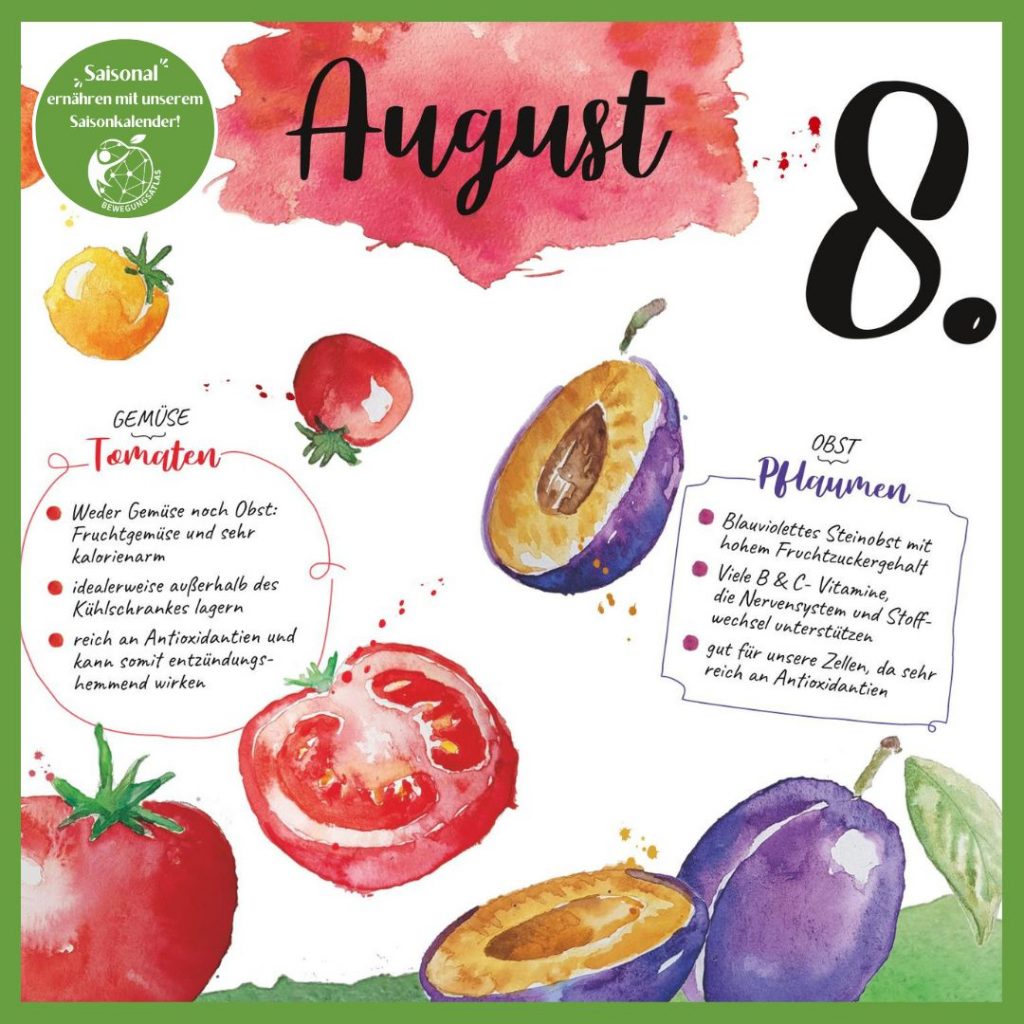
What foods can be harvested in August? Whether yellow, red or black tomatoes – tomatoes can make the menu in August colorful. Plums taste wonderfully sweet in cakes, savory as chutney or as a fruity component in natural yogurt. Graphics seasonal calendar: ©Alexandra Hansmeier
Seasonal diet in July
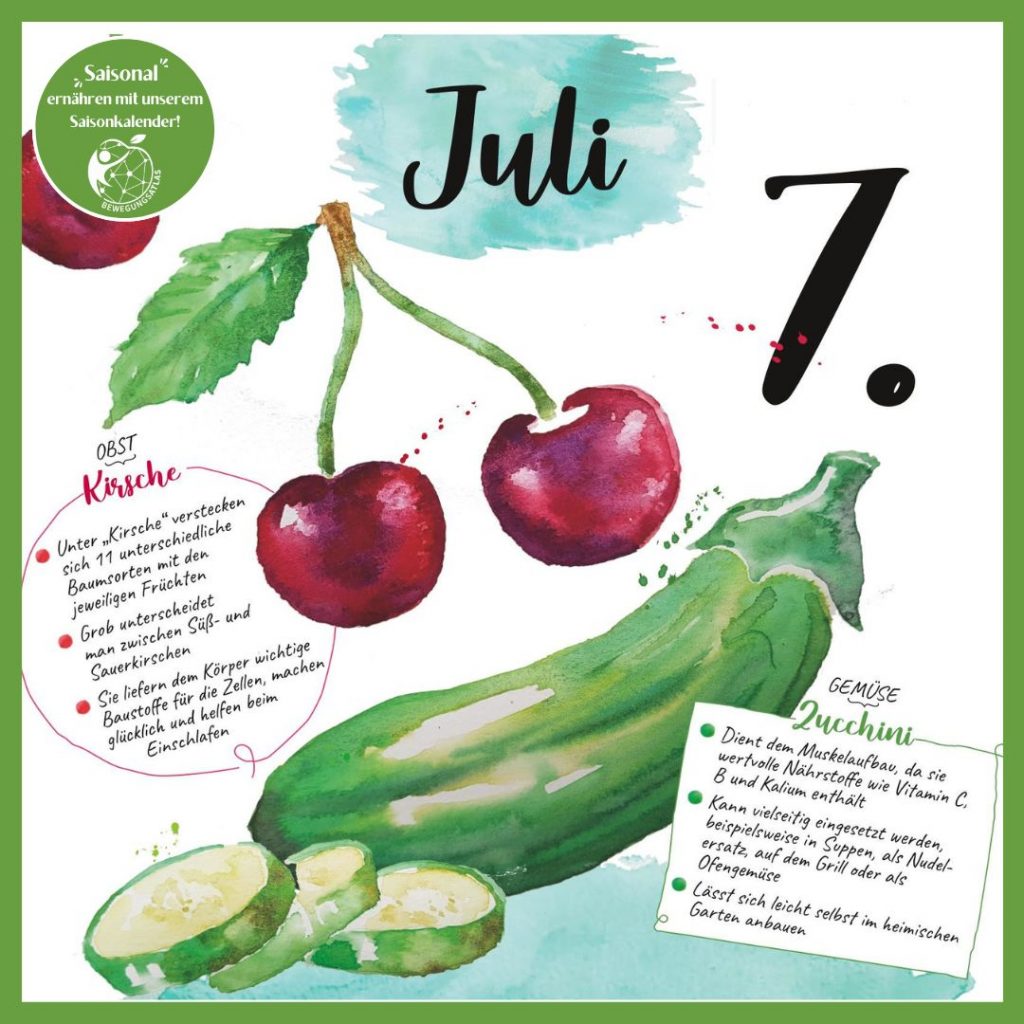
What foods can be harvested in July? Juicy, red cherries sweeten warm summer days. They are also a good source of melatonin and thus support the sleep-wake cycle. Zucchini brings the necessary freshness to the plates and is wonderful in sauces, on the grill, in casseroles or but in the salad. Graphics seasonal calendar: ©Alexandra Hansmeier
Feed seasonally in June
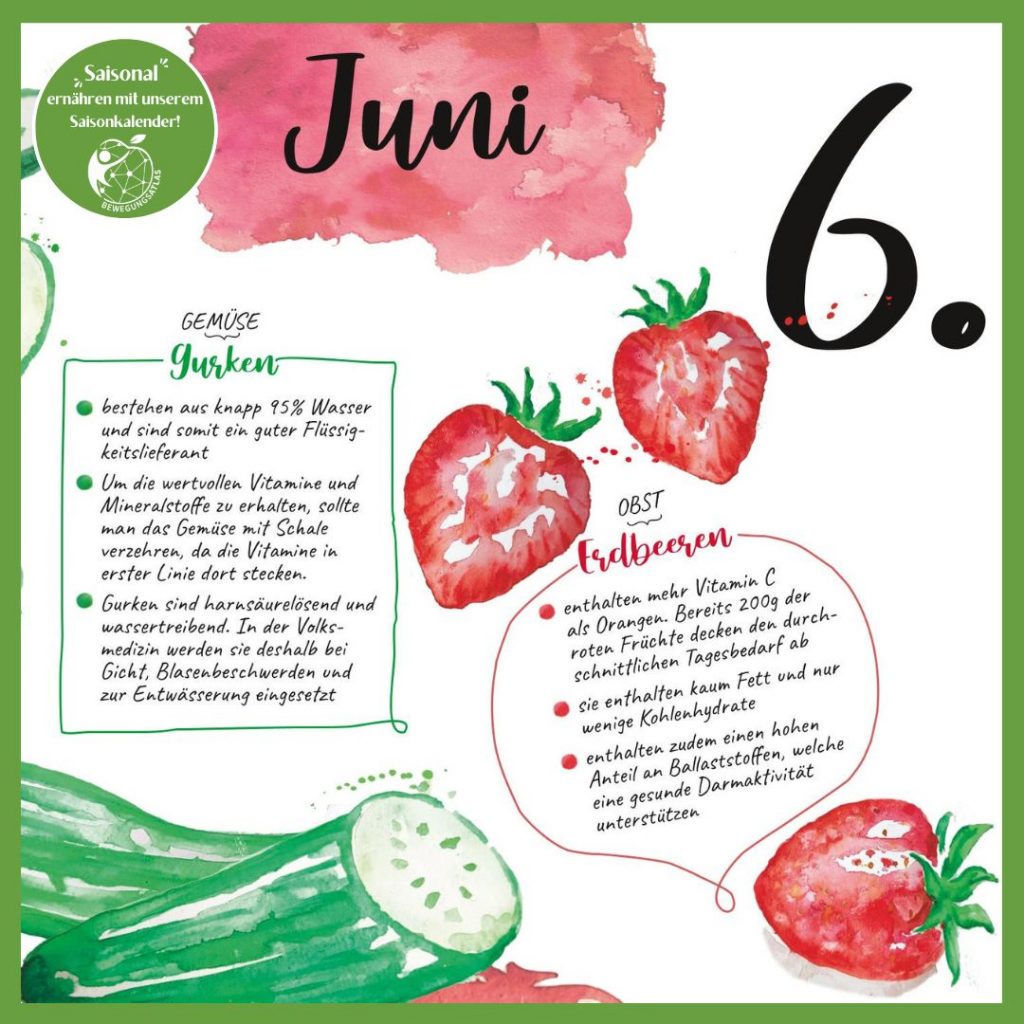
What foods can be harvested in June? With cucumbers and strawberries, summer is finally showing up on our plates. Cucumbers not only taste refreshingly delicious, but also provide the body with necessary fluids on hot days. Strawberries are a sweet snack between meals and enrich summer salads with delicious balsamic dressing. Graphics seasonal calendar: ©Alexandra Hansmeier
Feed seasonally in May
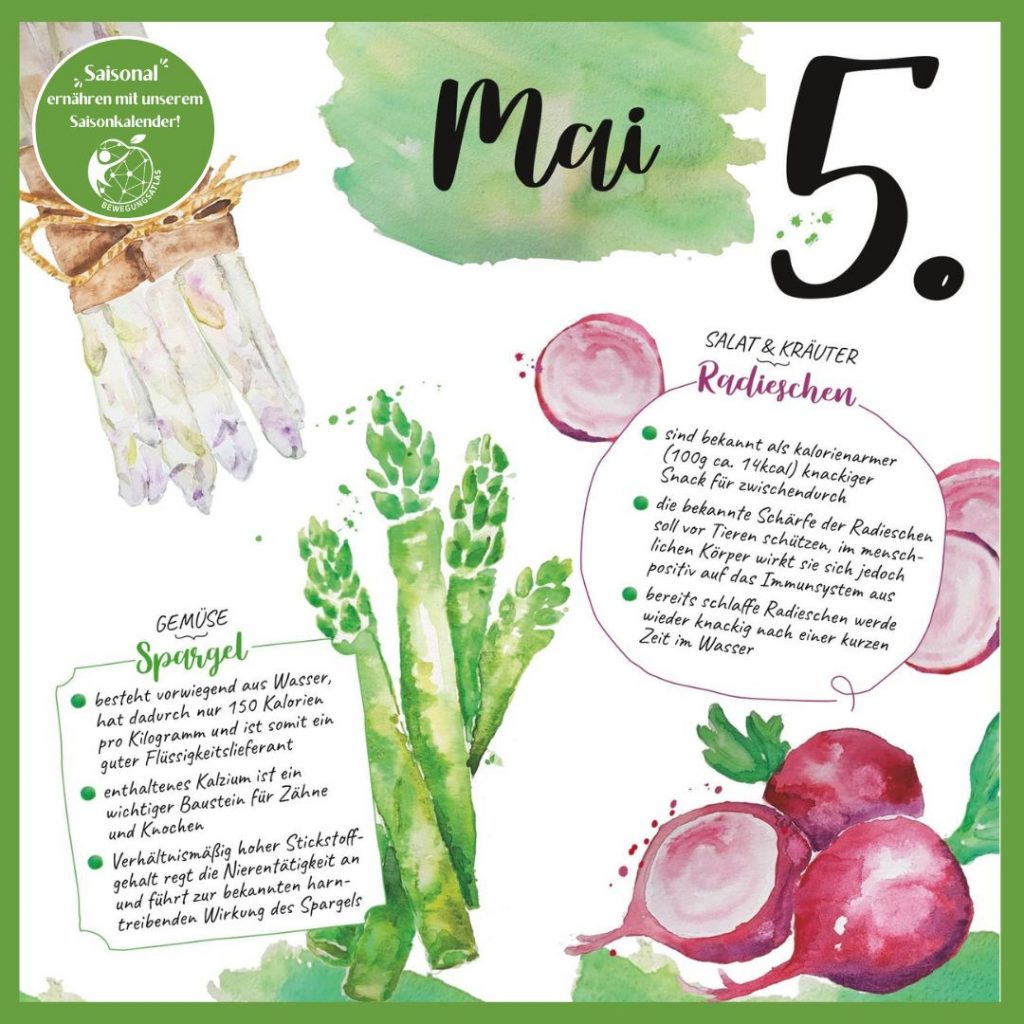
What foods can be harvested in May? Asparagus and radishes bring summer freshness to the menu. They also provide important nutrients for our body. Graphics seasonal calendar: ©Alexandra Hansmeier